Kitset Sheds FAQ – DIY Kits, Turnkey Builds, Materials & Support

Common Shed Questions
Yes. We offer full shed and garage construction nationwide, as well as DIY supply-only options.
If you require a fully built shed, we can manage the entire process including supply, delivery, construction, site works, and concrete slabs if required. We work with a nationwide network of experienced builders who construct steel sheds and garages to completion throughout New Zealand.
Project timelines vary depending on shed size, consent requirements, and site conditions, but most projects follow this general timeframe:
Engineering & documentation: Producer statements, engineering calculations, and building plans are typically prepared within 10 working days after deposit.
Building consent: Council processing usually takes around 20 working days, depending on the local authority.
Manufacture & delivery: Once consent is approved, sheds are generally manufactured and delivered within 10–15 working days.
Concrete foundations: Concrete floors and foundations are typically completed within 2–3 weeks, depending on shed size and site conditions.
Construction: Smaller garages are usually erected within 2–3 weeks, while larger sheds and commercial buildings may take 4 weeks or more.
The foundations form part of the shed’s structural design, and each shed comes with specific, builder-friendly foundation plans.
The simplest option is to hand these plans to a concrete layer, who can complete the entire foundation process for you.
If you want to save some cost, you can prepare the boxing and reinforcing yourself, then have a concrete layer place and finish the concrete for you.
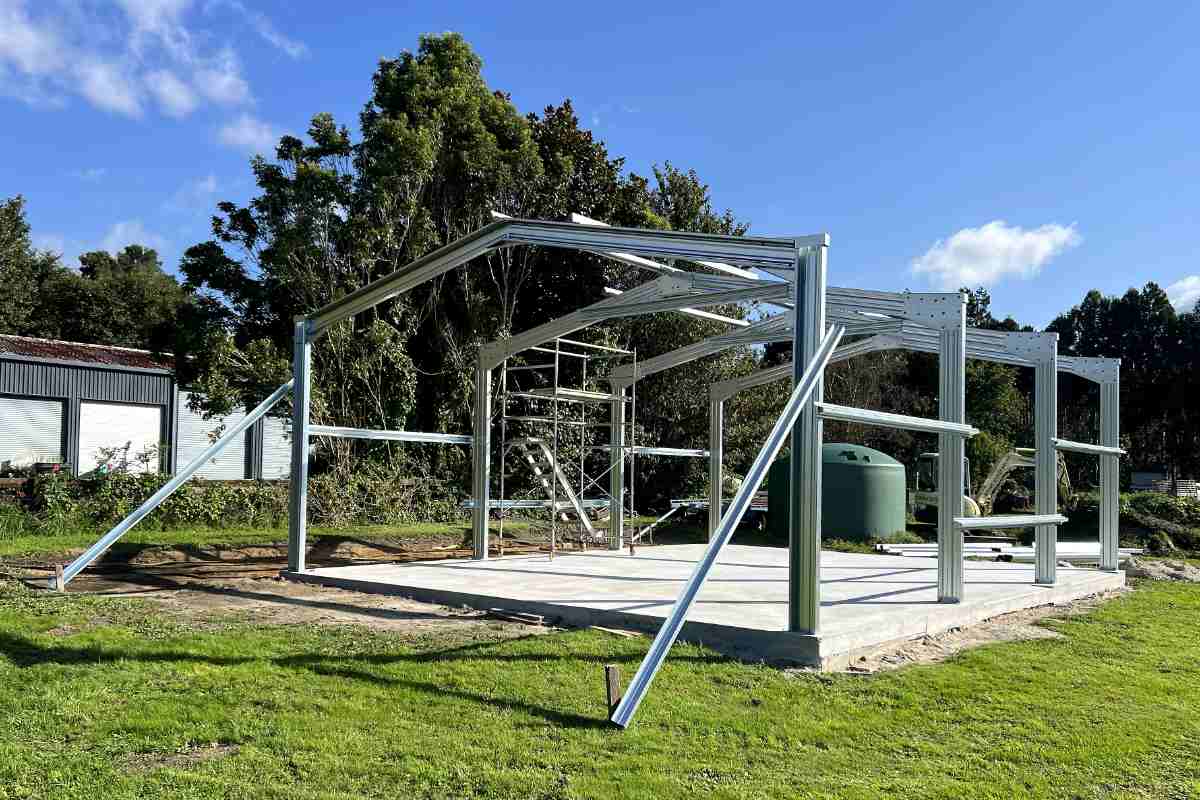
Building a steel shed or garage yourself is easier than you might expect, especially if you have basic building or engineering skills and are willing to put in some physical work.
Our clear, builder-friendly plans guide you step by step, whether you are constructing a storage shed, a farm shed, or a 2–3 bay garage. We provide full phone support and expert guidance throughout the build, helping you assemble your shed correctly, efficiently, and according to plan.
No. If the project is not classified as restricted building work, you do not need to be a licensed builder to construct a steel shed or garage yourself.
With basic skills and our clear plans, assembling a shed is straightforward. We also provide expert guidance and phone support throughout the build, helping reduce mistakes and ensuring you end up with a high-quality shed you can proudly say you built yourself.
Once the concrete foundations are in place:
A garage under 200 m² can typically be assembled by two people in around 2 weeks, or one person in about 3 weeks, assuming you have the right tools and equipment.
For sheds over 200 m², having three builders is recommended. With sufficient scaffolding and tools, these sheds usually take 2–3 weeks to complete.
Weather conditions, number of doors and windows, and builder experience can affect the overall timeline.
Some single-storey pole sheds and hay barns may qualify for a building consent exemption, provided strict criteria are met.
Key points include:
Maximum 110 m² net floor area
Located in a rural zone
Importance Level 1 classification
Design wind speed not exceeding 44 m/s or a High wind zone
Maximum clear span of 6.0 m
Maximum height of 4.0 m
Commonly used for livestock, equipment, fodder, or grain
Design must be carried out or reviewed by a Chartered Professional Engineer, or constructed/supervised by a Licensed Building Practitioner.
District planning rules still apply, and councils usually require a formal written exemption application, often via a specific exemption form.
Some shed companies sell sheds before providing responsible advice — however, the responsibility ultimately rests with the property owner.
Every shed we sell is 100% custom designed.
Each building is designed specifically for the exact position on your property and includes:
A bespoke PS1 Producer Statement
Custom building plans
Engineering calculations tailored to your design
There are no standard sizes — you sketch it, we design, engineer, quote, and deliver any shape or size shed or garage you want.
Yes. We are New Zealand owned and operated, and we source all components locally while working exclusively with NZ-based engineers, consultants, and suppliers.
This ensures better communication, faster turnaround times, local accountability, and no offshore engineering queues. Your shed is designed, built, and delivered with genuine New Zealand expertise.
Yes. We dispatch buildings from Steel & Tube branches nationwide, using their internal freight network to ensure safe, efficient, and timely delivery throughout both islands.
All of our garages, sheds, and barns are individually designed through a collaboration between an industry-leading, independent engineering firm and a shed builder with over 20 years of hands-on construction experience.
Compared with cheap, no-frills sheds designed using offshore software systems, our sheds use robust structural design criteria tailored specifically to New Zealand wind zones, site conditions, and intended use.
The result is a solid shed or garage that looks great and performs long-term — not a shed designed merely to meet minimum requirements.
We never cut corners on materials.
Minimum 0.40 mm cladding
0.55 mm flashings
Genuine NZ-made COLORSTEEL® Maxam® with Activate™ technology
3 mm G450–Z450 galvanised brackets
6 mm hot-dipped galvanised base connections
Heavy-duty roll-formed portal frames with deep longitudinal swages
Our sheds stand straight, strong, and durable for decades.
The shed market can be confusing, so it’s important to choose a company with real hands-on experience, local engineering, and accountability.
Ask questions such as:
Is the engineering completed by a New Zealand-based engineer?
How many sheds have you personally built?
Can you guarantee engineering and documentation in weeks, not months?
Do you use Australian-developed software to quote my shed?
These questions help ensure your shed is designed, built, and delivered correctly.
More Shed FAQs and Helpful Resources
Pricing and Cost
How much does a shed cost in NZ?
Shed prices in NZ vary depending on size, design, materials, and site conditions. Small kitset sheds may start from a few thousand dollars, while larger custom or fully built sheds can cost significantly more. For a better idea, view our shed prices guide.
What affects the cost of a shed?
The main factors are size, span, height, cladding type, number of doors and windows, site conditions, and whether you choose a kitset or full build. Learn more about pricing factors on our shed pricing page.
Is it cheaper to build a shed or buy a kitset?
Kitset sheds are usually more cost-effective because you save on labour and avoid additional margins that can come with fully managed builds. A full build can be easier and faster, as everything is handled for you. The best option depends on your budget and how involved you want to be. Compare your options on our build options page.
How much does a concrete slab cost for a shed?
Concrete costs vary based on size, thickness, ground conditions, and access. It is a significant part of the total project cost and should be planned early. Learn more about shed foundations.
Can I get a ballpark price before committing?
Yes, you can get a quick ballpark estimate using our simple forms, then move to a firm quote once your design and site details are confirmed. Start with a ballpark quote.
Building Consent and Rules (NZ)
Do I need building consent for a shed in NZ?
In many cases, small sheds may not require consent, but larger buildings or those with plumbing, electrical, or specific uses will. It’s important to check with your local council. You can learn more in our shed resources section.
What size shed can I build without consent in NZ?
The size and rules vary depending on location and use, but small non-habitable sheds may be exempt if they meet specific criteria. Always confirm with your local authority. See more guidance in our shed resources.
Do kitset sheds need council approval?
Yes, kitset sheds still need to meet building regulations. If the structure exceeds exemption limits or includes certain features, consent will be required. Learn more about this on our shed engineering page.
Who handles building consent for a shed?
For full build projects, consent can often be managed as part of the process. For kitsets, the owner or builder usually handles council approval. Read more about how projects are managed on our project management page.
What information is needed for building consent?
Typically this includes site plans, engineering details, foundation design, and building specifications to meet NZ standards. Learn more about requirements on our engineering page.
Shed Types and Design
What types of sheds are available in NZ?
Common shed types include gable sheds, mono pitch sheds, barns, garages, and custom-designed buildings for specific uses. Explore the full range on our shed types page.
What is the difference between a gable and mono pitch shed?
A gable shed has two roof slopes meeting in the middle, while a mono pitch shed has a single sloping roof. Mono pitch can be simpler, while gable is often better for larger spans. Learn more about mono pitch sheds.
What is an American barn?
An American barn features a high central section with lower side lean-tos, offering extra space and versatility for storage or workshops. See examples of American barns.
Which shed design is best for my needs?
The best design depends on how you plan to use the building, the size required, site conditions, and budget. You can explore options on our custom sheds page.
Can sheds be customised to suit my layout?
Yes, sheds can be customised in terms of size, layout, doors, windows, and features to suit your exact requirements. Learn more about custom shed design.
What is a gable shed?
A gable shed is a common design with two roof slopes meeting in the centre, offering strength, simplicity, and flexibility for many uses. View more details on our gable shed page.
What is a mono pitch shed?
A mono pitch shed has a single sloping roof and is often used for modern designs or where height needs to vary across the building. Learn more about mono pitch sheds.
What is a quaker barn?
A quaker barn features an offset roof design that provides extra headroom and usable space compared to standard sheds. See more on our quaker barn page.
Build Options and Company Types
Is it better to buy a kitset shed or have it built?
Kitset sheds are more cost-effective and give you flexibility, while a full build is more convenient and managed for you. The best option depends on your budget and how involved you want to be. Compare your options on our build options page.
What is the difference between kitset and turnkey sheds?
A kitset shed is supplied ready for assembly, while a turnkey shed includes everything from site preparation through to full construction. Learn more about the differences on our build options page.
Are franchise shed companies more expensive?
Franchise companies can have higher overheads, which may affect pricing. Independent suppliers often offer more flexibility in design and pricing depending on the project. Learn how to compare on our compare shed companies page.
What is the difference between franchise and independent shed builders?
Franchise builders typically follow standard systems and designs, while independent companies can offer more flexibility with customisation, materials, and pricing. See how they compare on our comparison page.
Which option gives the best value for money?
The best value depends on your priorities. Kitsets can reduce costs, while full builds save time and effort. Understanding what is included in the price is key. Learn more on our shed pricing page.
Building Process
What is the process of building a shed?
The process typically includes design, pricing, engineering, site preparation, foundations, delivery, and construction. You can see a full breakdown on our shed building process page.
How long does it take to build a shed?
Timeframes vary depending on size and complexity, but most sheds can be completed within a few weeks once construction begins. Learn more about timelines on our building process page.
What happens after I order a shed?
After ordering, your shed moves into design finalisation, engineering, and scheduling before delivery and construction. Read more about this on our project management page.
Can I build a shed myself?
Yes, kitset sheds are designed for assembly, but many people choose experienced builders to ensure quality and speed. Learn more about your options on our shed builders page.
Do you manage the full shed project?
Yes, full build projects can include project management from start to finish, covering all stages of the build. Find out more on our project management page.
Materials and Quality
What is the best material for a shed in NZ?
Steel is commonly used due to its strength, durability, and ability to handle New Zealand’s weather conditions. Learn more about steel sheds.
How long do steel sheds last?
A well-built steel shed can last decades when designed correctly and maintained, especially with quality materials and coatings. Read more about shed cladding.
What thickness steel is used in sheds?
Steel thickness varies depending on design and load requirements, but higher quality sheds use heavier gauge materials for strength and durability. Learn more about shed framing.
Is Colorsteel good for sheds?
Yes, Colorsteel is designed for NZ conditions and offers strong corrosion resistance and long-term performance. See more about Colorsteel sheds.
What makes a shed strong and durable?
Strength comes from proper engineering, quality materials, strong framing, and correct installation. Learn more about shed engineering.
What components are used in a shed?
Sheds are made up of structural framing, cladding, fasteners, and accessories that all contribute to strength and durability. See more about shed components.
What accessories can I add to a shed?
Common accessories include doors, windows, skylights, ventilation, and internal features. Explore options on our shed accessories page.
Use Cases and Sizing
What size shed do I need?
The right size depends on what you plan to store or use the shed for, including vehicles, machinery, workspace, or storage needs. Learn more on our custom sheds page.
What are sheds commonly used for?
Sheds are used for storage, workshops, garages, farm buildings, and lifestyle or commercial purposes. Explore options on our shed range page.
What size shed is best for a farm?
Farm shed sizes vary depending on equipment, livestock, and intended use. Larger open-span designs are often preferred. See more on our farm sheds page.
Can a shed be used as a garage or workshop?
Yes, sheds can be designed and customised to function as garages, workshops, or multi-use spaces. Learn more about garage options.
How high should a shed be?
Height depends on what needs to fit inside, such as vehicles, machinery, or storage requirements, and should be planned carefully. Explore options on our custom sheds page.
What is a workshop shed?
A workshop shed is designed for working space, often including enclosed areas, doors, and room for tools and equipment. See more on our workshop sheds page.
Can a shed be used as a sleepout?
Yes, sheds can be designed or adapted for sleepouts depending on layout, insulation, and compliance requirements. Learn more on our sleepouts page.
What is a storage shed used for?
Storage sheds are designed for secure storage of tools, equipment, and household or business items. See more on our storage sheds page.
Are budget sheds worth it?
Budget sheds can be a good option if they are built with quality materials and proper engineering. Learn more on our budget sheds page.
Timeframes and Delivery
How long does it take to get a shed built?
Timeframes vary depending on design, engineering, and scheduling, but most projects move from order to completion over several weeks. Learn more on our project management page.
How long does delivery take for a kitset shed?
Once manufacturing is complete, delivery is usually arranged promptly, depending on location and transport availability. See more on our project management page.
Can sheds be delivered anywhere in NZ?
Yes, kitset sheds can be delivered nationwide, with transport arranged to suit your site location. Find your area on our local shed builders page.
What can delay a shed project?
Common delays include weather, site preparation, consent approvals, and material scheduling. Learn more about the process on our building process page.
How quickly can I get a ballpark price?
Ballpark prices can usually be provided quickly once basic details about your shed are submitted. Get started with a quick quote.
Do you build sheds across New Zealand?
Yes, sheds can be supplied and built across New Zealand with delivery and local builder support available. See locations on our local shed builders page.
Custom Sheds and Options
Can I design a custom shed?
Yes, sheds can be fully customised to suit your size, layout, and intended use. Learn more on our custom sheds page.
What options can I customise in a shed?
You can customise dimensions, layout, doors, windows, cladding, colours, and additional features like lean-tos. Try options on our shed designer.
Can I add features to my shed later?
Some features can be added later, but it’s best to plan key elements during the design stage for efficiency and cost. Learn more on our custom sheds page.
Can I choose my shed colours and cladding?
Yes, a range of cladding profiles and colours are available to match your preferences and site. See options on our Colorsteel sheds page.
Can sheds be designed for specific uses?
Yes, sheds can be designed for farming, workshops, garages, storage, and many other specific applications. Explore options on our custom sheds page.
Choosing a Shed Company
How do I choose the right shed company in NZ?
Look for experience, quality materials, engineering standards, and what is included in the price. Comparing more than just cost is important. Learn how to compare on our compare shed companies page.
What should I compare when choosing a shed supplier?
Key things to compare include materials, engineering, warranties, inclusions, and the overall value of the build. See what to look for on our comparison page.
Are all shed companies the same?
No, shed companies can vary significantly in quality, materials, design, and service, so it’s important to compare carefully. Learn more on our why choose us page.
What questions should I ask before buying a shed?
Ask about materials, engineering, inclusions, timelines, and what is covered in the price to avoid surprises. See more on our comparison page.
How do I know if a shed company is reliable?
Look for proven experience, clear communication, quality components, and consistent delivery of completed projects. See customer feedback on our shed reviews page.
Do sheds come with a warranty?
Yes, warranties can vary depending on materials and supplier, so it’s important to understand what is covered. Learn more on our shed warranty page.
Who are Kitset Sheds?
Kitset Sheds is a New Zealand company specialising in custom-designed sheds, garages, and barns built for local conditions. Learn more on our about us page.
Can I see examples of sheds you’ve built?
Yes, you can view a range of completed projects to get ideas and see the quality of work. Browse our shed gallery.
Are there videos of shed builds?
Yes, videos can show real shed builds, processes, and completed projects. Watch more on our videos page.
Shed Resources
Explore more guides, materials, and technical information to help with your shed project.