
Steel Sheds NZ
Steel sheds made using roll formed components are widely used across New Zealand for rural, residential, and commercial buildings. They are suited to everything from private storage through to large workshops and offices.
Galvanised steel has become the go-to building product in NZ for good reason. It is fast to manufacture and allows for versatile design options.
One advantage of steel frame sheds is the ability to achieve wide clear spans without internal support posts, creating more usable space inside the building. Another benefit is that Colorsteel cladding is guaranteed by New Zealand Steel and delivered to site cut to length, making installation simple and fast.
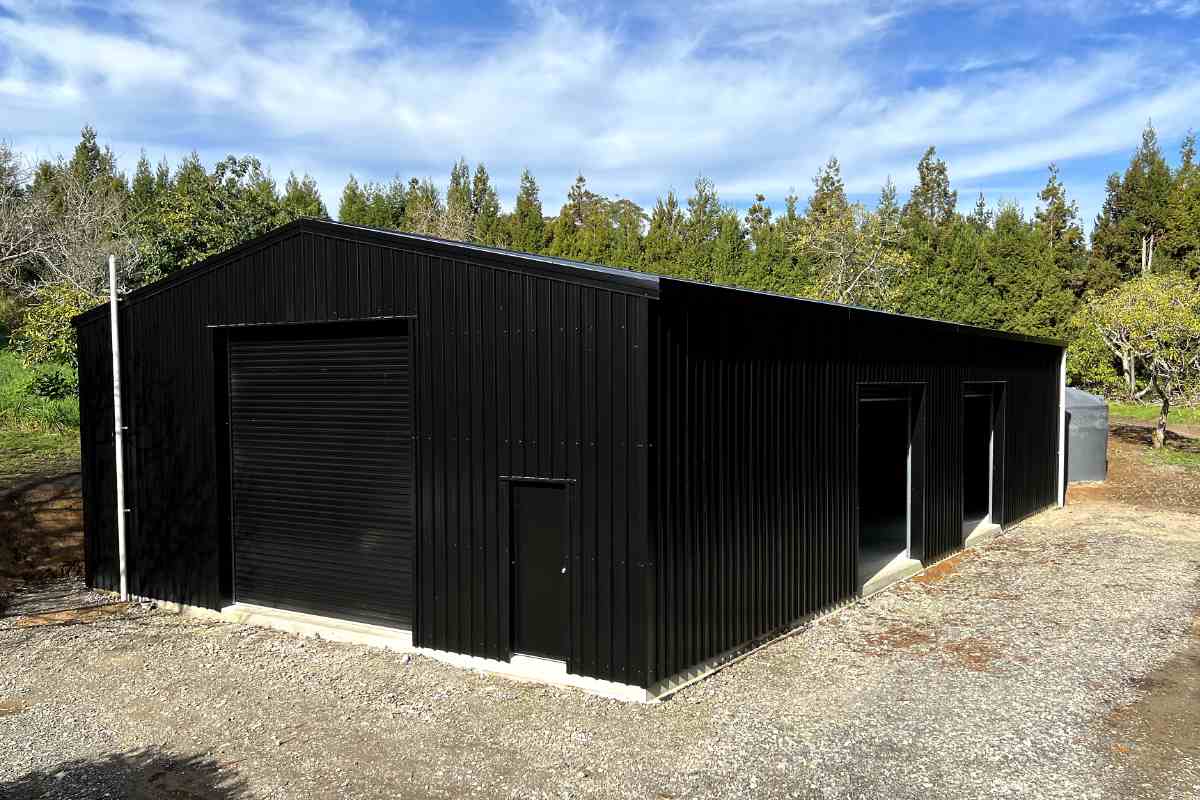
Types of Steel Sheds
Steel sheds come in a range of standard design styles and sizes.
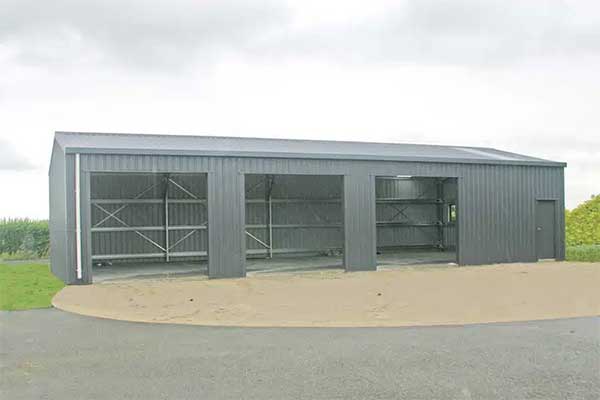
Gable Sheds
Versatile, practical, and widely used where wide spans are required
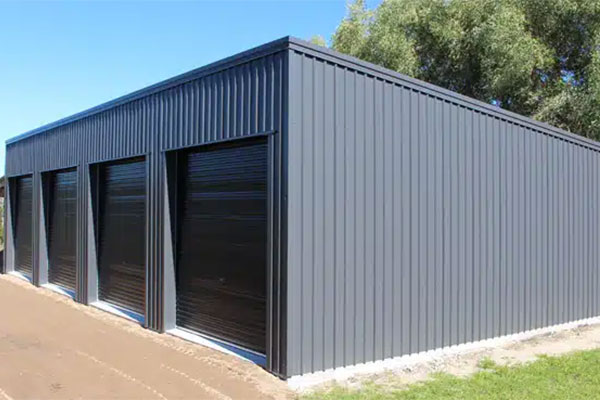
Mono Pitch Sheds
Simple, cost-effective, and suited to rural and residential settings
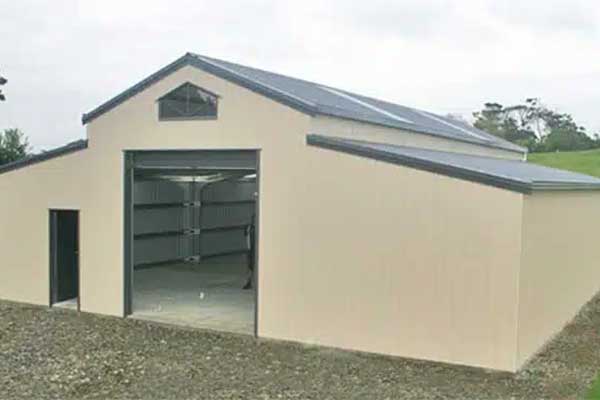
American Barns
Designed for both appearance and strength, ideal for rural and lifestyle properties

Kiwi Barns
Gable sheds with lean-tos, offering a practical and cost-effective solution
How Steel Sheds Are Built
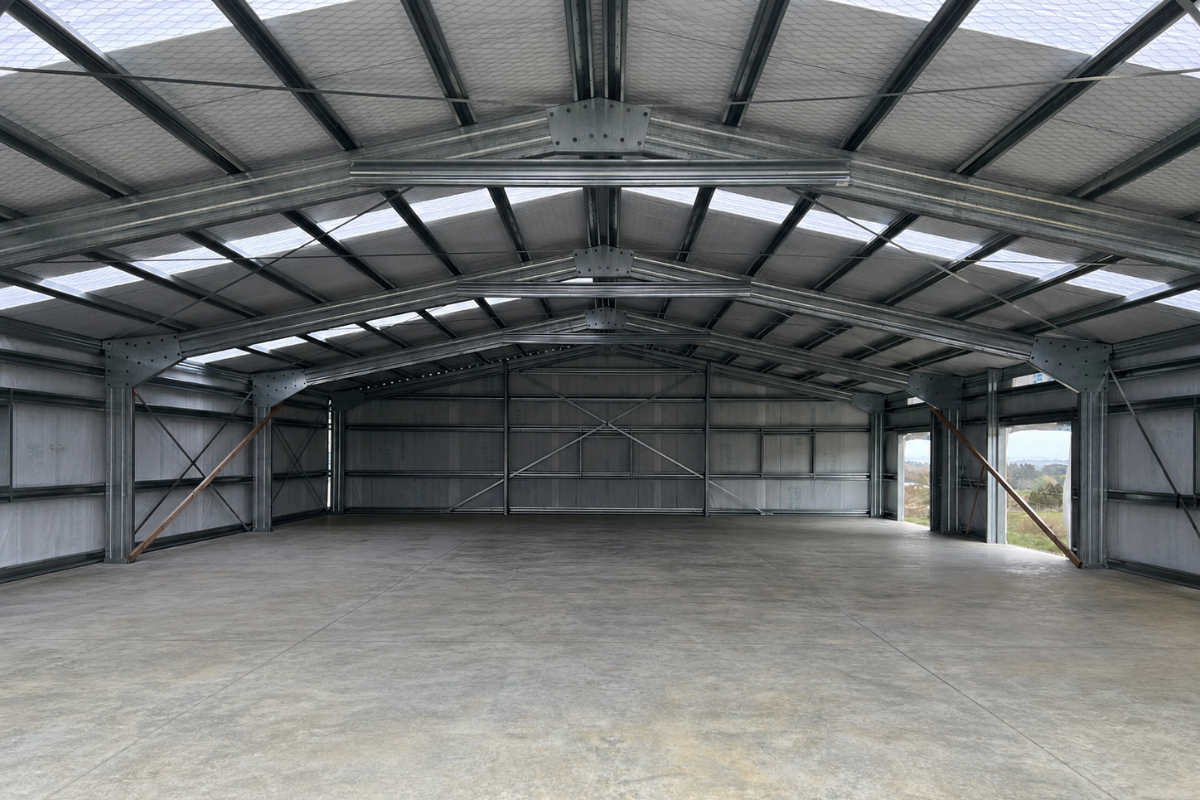
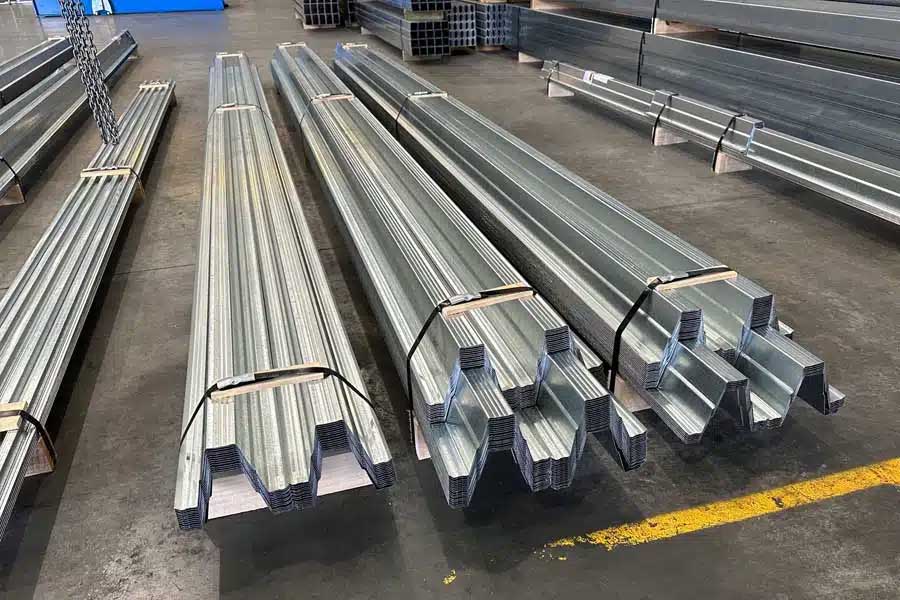
Steel shed designers use roll formed framing components that are cut to length with precisely positioned bolt holes for fast, accurate assembly. Precision folded brackets allow the portal frames to go together consistently and as designed.
Roll formed top hats span between each portal, allowing fine adjustment during installation before being fixed solid. This proven system eliminates gaps in the connections and locks the structure together properly.
Combined roll formed components speed up the build process and result in a straight, accurate structure. Colorsteel cladding then fixes directly to the frame, sitting plumb, with cladding profiles aligning with corners, flashings, and door openings for a sharp finish.
Steel vs Timber Sheds
Steel and timber sheds are built differently and suit different applications. Timber pole sheds are commonly used for farm and agricultural buildings. They take longer to build and require heavy machinery, such as an auger, to drill holes and place the poles. Most of the work, including measuring, cutting, and drilling, is done on site, which can make construction more labour intensive.
Steel sheds use pre-engineered components that bolt together, making them faster to build and more accurate.
Both timber and steel have their place depending on the application. Timber is commonly used for agricultural buildings, while steel is often chosen for workshops, garages, and commercial use where accuracy and long-term performance are important.
We primarily use steel but often combine steel and timber where it suits the design, allowing the building to be tailored to the specific job and site requirements.
Steel Shed Advantages
- Better performance in earthquakes
- Clear span construction with no internal poles
- Pre-cut components with tight tolerances
- Faster build times with less on-site work
- Does not rot, warp, or attract pests
- Clean, straight finish
Timber Shed Limitations
- More labour intensive with on-site cutting
- Requires machinery for installation
- Limited ability to achieve wide clear spans
- Can shrink, warp, or move over time
- Susceptible to pests and moisture
Materials and Components
Pre-painted Colorsteel cladding begins as ZINCALUME® steel substrate before going through a roll-to-roll baked painting process. NZ Steel’s genuine COLORSTEEL MAXAM® uses Activate™ technology for durability and corrosion resistance, with Steel & Tube roll forming it into cladding profiles suited to New Zealand conditions.
Our sheds are made from cold rolled galvanised steel produced by New Zealand Steel®. The framing components start as galvanised coil, which is roll formed into accurate, lightweight, and very strong sections.
We use GALVSTEEL® plate to manufacture CNC folded, laser cut framing brackets, along with hot dipped galvanised base connections for strength and corrosion resistance.
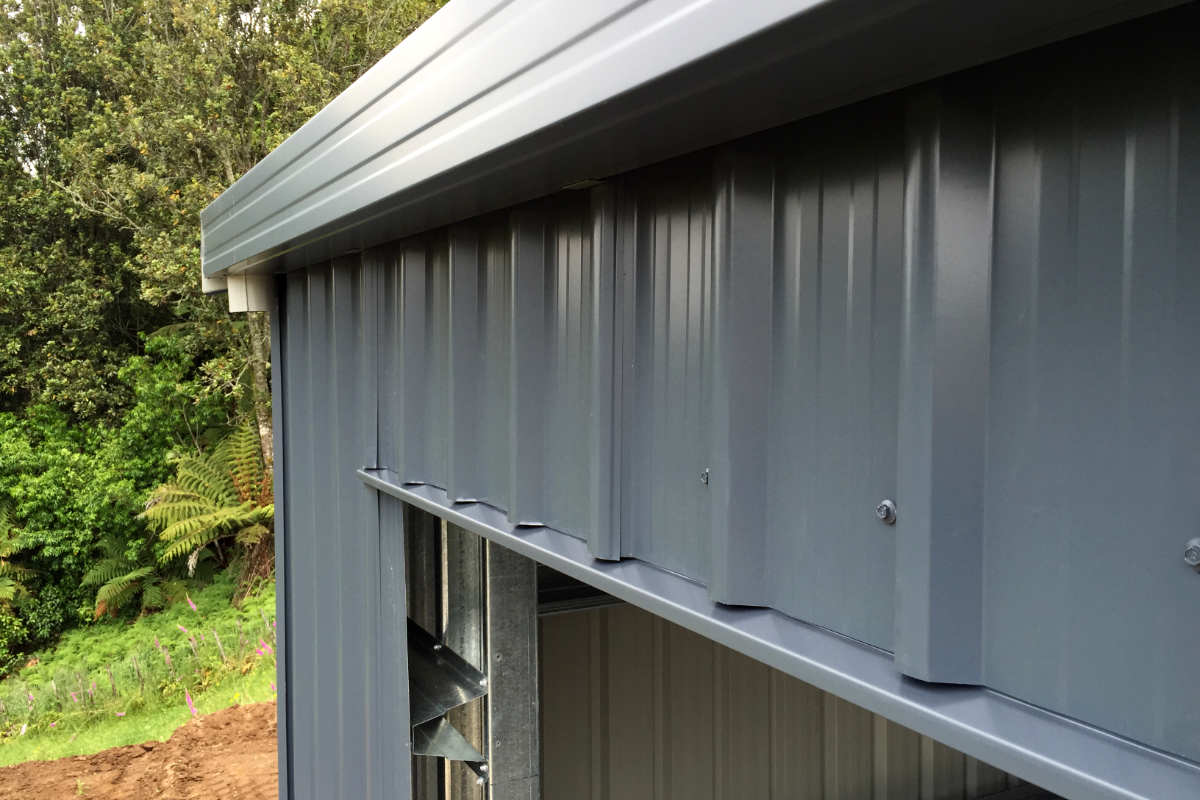
Other New Zealand Colorsteel products used in our sheds include personal access doors, roller doors, gutters and flashings.

Build Options
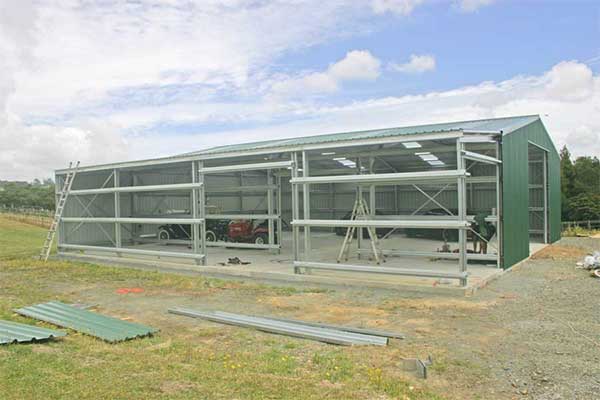
Steel garages and sheds can be supplied and delivered in kitset form, complete with everything from floor level up. This option suits those looking to save on construction costs, with the greatest savings achieved when building it yourself (DIY).
The next most cost-effective option is to purchase the kit and oversee the project yourself, arranging each stage of the build using your own contacts or local shed builders.
Alternatively, you can take a simple hands-off approach and have us manage the entire process for you from start to finish.
Cost of Steel Sheds
The most accurate way to understand the cost of a steel shed is to make an enquiry. Sheds vary in size, design, and features such as doors and windows, while factors like wind zones, seismic requirements, and exposure conditions all influence the final price.
We offer options ranging from a simple ballpark estimate through to a full fixed quote that is guaranteed not to change.
Visit our pricing page to explore your options, tailor a 3D shed design, or make an enquiry.
Find Answers to the Most Common Questions Here
Can’t find what you’re looking for? Contact us and we’ll get back to you quickly.
New shed companies often try to reinvent the wheel with new designs and construction methods to make their product seem better. The reality is many of these systems look good on paper, and to the untrained eye they appear solid.
Experienced shed builders can spot the faults straight away. In most cases, the original steel portal frame with top hat system remains the most efficient, practical, and thoroughly proven system.
Steel sheds are designed to last for decades when built properly using quality materials. Galvanised steel framing can last well beyond 50 years in an enclosed building where it is not regularly exposed to damp conditions.
New Zealand Steel cladding, when maintained according to the manufacturer’s guidelines, is typically guaranteed for up to 50 years and beyond. A well-built shed can provide long-term performance in New Zealand conditions for many decades.